

Illustrations Tell Stories

Tell a Story
A pretty picture isn’t enough
When I begin an illustration, I always begin with a story. Who are these characters? What are they doing? Why are they here? What happened just before this moment, and what might happen next?
A beautiful image can catch your eye, but story gives you a reason to stay. It turns characters and objects into clues and makes you wonder about the world beyond the edges of the picture.


Start with a story ideaa
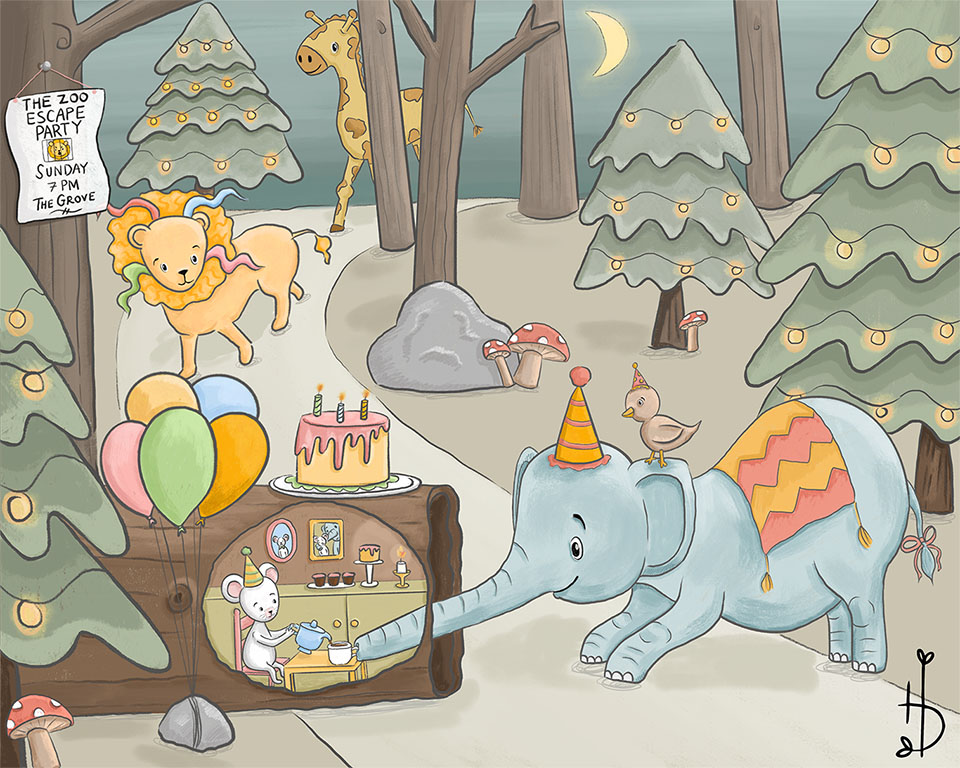
For this illustration, I started with a simple idea: What if the animals escaped from the zoo and moved into the neighboring forest?
That immediately gave me more to think about. Why did they escape? What would they do once they were free? Where would they live? I imagined them throwing a party to celebrate their new life in the woods. Now I wasn’t just drawing animals in a forest. I was illustrating a moment in a story.
Every detail can add to the story
Once I know the story, I can decide what belongs in the picture. The party invitation tells us there’s an event. Balloons and cake tell us someone is celebrating. A mouse has made a home inside an old suitcase. Animals appear between the trees, and an elephant arrives wearing a party hat with a duck along for the ride.
Those details aren’t there simply to fill the space. Each one gives the viewer another piece of the story.


Leave room for the reader
I don’t want an illustration to answer every question. Where did the suitcase come from? Who baked the cake? Is the elephant arriving late? Are there more escaped animals on their way?
That space between what I show and what I leave unexplained is where the viewer gets to join in. Children can notice something new, make connections, and imagine possibilities that I never put into words.

